
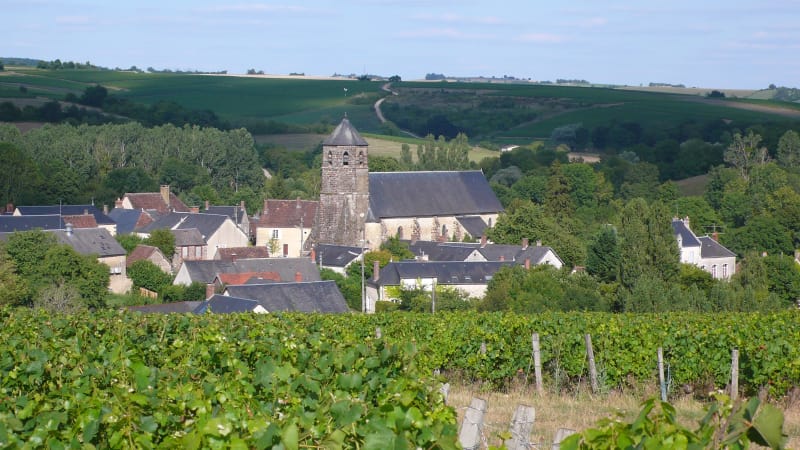
Pretty much everyone has heard of Sancerre, the fresh Sauvignon Blanc wine from the Loire. But there is more to the Central Loire than just Sancerre, so we’ve pulled together a Central Loire guide so that you can get to grips with this wine region and its wines, including: the essentials of terroir (the soil types, climate, average temperatures, rainfall, longitude and latitude, and altitude); the main grape varieties used for different wine varieties; the viticultural methods, age of vineyards and vine training systems; the winemaking techniques, wine styles and tasting notes; and the production area in size and number of producers.
Where is it?
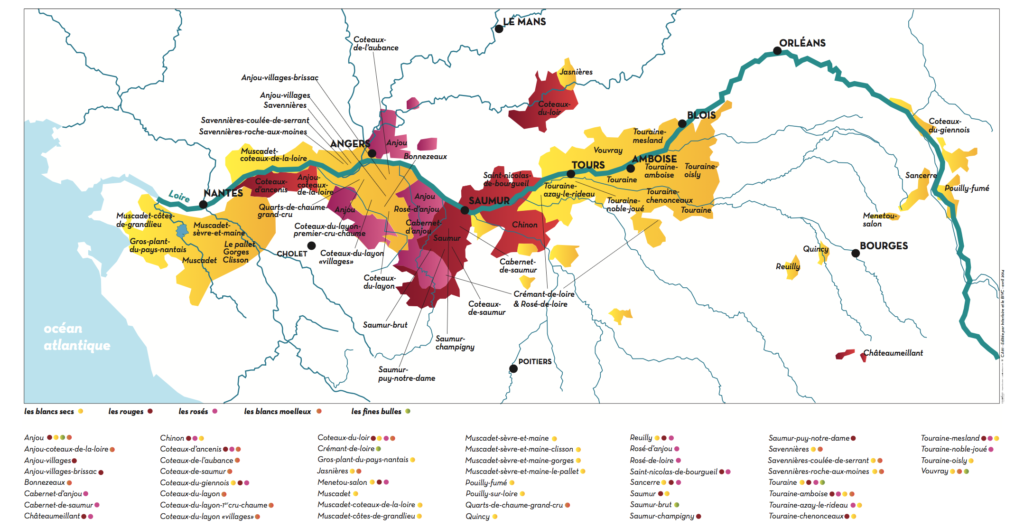
The Central Loire area is the easternmost sub-region of the Loire. It is located to the south of Paris, west of Burgundy. It is an area of hills following the Loire and Cher valleys in the heart of France.
The Essentials of Terroir
Climate & Landscape
The climate here is continental. This is an area of gently rolling hills and plateaux sculpted by the Loire and Cher rivers.
Temperatures
The temperatures vary significantly between winter (-1°C or less) and summer (26°C).
Rainfall
600 to 800 mm per year
Soils & Sub-Regions
[mepr-hide if=”rule: 2080″]
…
This content is exclusive for Members. Take a look at the introductory packages below to become a Member of 80 Harvests and get unrestricted access to all our content.
Thank you for supporting the journey and being part of the 80 Harvests community!
[mepr-group-price-boxes group_id=”2070″]
[/mepr-hide]
[mepr-show if=”rule: 2080″]
Sancerre:
- Clay and limestone white soils, (terres blanches) situated on the hills of the most western part of Sancerrois
- Pebbly soils, known as caillottes
- Siliceous-clayey soils found in the hills east of the vineyard.
Pouilly-Fumé and Pouilly-sur-Loire:
- Villiers limestone from the Oxfordian geological period (caillottes)
- Marls with small oysters from the Kimmeridgian geological period (Terres blanches)
- Barrois limestone from the Portlandian geological period (caillottes)
- Clay-with-flints from the Cretacean geological period
Menetou-Salon:
- This is an area of sedimentary limestone soil.
Quincy:
The vines are planted in an ancient sand and gravel terrace of the Cher river and the soil warms up rapidly. Three soil types are found here:
- Sandy-gravel on clay formation.
- Sandy soil and red sand formation.
- Silty-sand on sandy-clay or clay more or less sandy.
Reuilly:
- Grapes are grown on fairly steep chalky-marly slopes and on sandy-gravelly terraces.
Coteaux du Giennois:
- Flint or limestone hills along the Loire
- Ancient terraces of the Loire in Gien
- In some areas the soils continue the geological formations of Sancerre and Pouilly; mainly limestone east of the Cosne fault and flint to the west.
Châteaumeillant:
- The soils here mainly comprise sandy or clayey-sandy siliceous soils
Longitude
2.8˚ E (Sancerre)
Latitude
47.3˚ N. (Sancerre)
Altitude
200-400m
Viticulture Facts & Vineyard Management
As is the case across the whole Loire region, this is an area of many small vineyard holdings, many belonging to families. Viticultural techniques can vary but there is a significant trend to sustainable methods, including organic and biodynamic production.
The harvest is usually between late September and late October. Some grapes are still harvested by hand, particularly the red grapes, though most are picked with mechanical grape harvesters.
Average yields
40-60 hectolitres per hectare.
Vine Training systems
Guyot and cordon are most common; Royal Cordon is being introduced more.
Viticultural Challenges
Spring frosts can destroy new shoots, reducing that year’s yields.
Excess vigour in cool years, resulting in unpleasantly herbaceous aromas and a lack of fruity aromas and flavours. To counteract this, growers are allowing grass to grow between the rows and also removing buds to lower yields and reducing the level of leaves in the canopy to ensure ripening.
Grape Varieties
Sauvignon Blanc
This is by far the most planted variety in the Central Loire, accounting for around 70% of all the vines in this area and every Central Loire appellation except Pouilly-sur-Loire and Châteaumeillant makes some Sauvignon Blanc wine. This is one of the world’s favourite white varieties with its zesty acidity, light body and either herbaceous or citrus aromas, depending on the level of ripeness when the grapes were picked. In the Loire, it tends to offer aromas and flavours of gooseberries, grassy or elderflower type notes and, these days, sometimes a riper peachy/pineapple note, but the fruity aromas will always be more subtle than a New World Sauvignon Blanc. Where the grapes have been grown on chalky soils, the wines will be ready to drink sooner than is the case for wines made from Sauvignon Blanc grapes grown on marl or flinty soils – these wines can take 2 or more years of ageing.
Chasselas
This white variety, which in some areas of the world is grown as a table grape, makes relatively neutral and light-bodied wines that are at their best in Switzerland. This variety is grown in Pouilly-sur-Loire to make easy-drinking white wines.
Pinot Noir
The difficult grape that has gained such renown in regions like Burgundy accounts for around 20% of the vines in the Central Loire. It is used to make reds and rosés in Sancerre, Menetou-Salon and Reuilly and blended with Gamay in Châteaumeillant and Coteaux du Giennois. Pinot Noir is best grown in areas that are neither too warm nor too cold and have well drained soils (particularly chalky ones). Young wines have aromas of cherries and violets; with ageing, they develop characteristic Pinot Noir notes of game and truffles and even brandy-infused cherries.
Gamay
This black-skinned variety is grown in Châteaumeillant and Coteaux du Giennois, where it is blended with Pinot Noir to make fruity red wines with a peppery note or light pink, fruity and easy-drinking rosés. Châteaumeillant rosés can also have Pinot Gris in the blend.
Pinot Gris
This pink-skinned variety is made into widely varying styles of wine around the world but in Reuilly and Châteaumeillant in the Central Loire, it is made into light, easy-drinking rosé wines, usually blended with Pinot Noir and, in Châteaumeillant, with Gamay too.
Wine Varieties & Winemaking Styles
Sancerre is particularly known for its white wines made with Sauvignon Blanc, which have mineral, herbaceous (nettle) and gooseberry aromas, high acidity and a rich, round palate. The older style of grassy, gooseberryish fruit is being replaced by richer, more peach and melon notes. It also produces reds and rosés from Pinot Noir. The reds have aromas of cherries and are firm, full and long, while the rosés are fresh and fruity.
Pouilly-Fumé: All whites. Pouilly-Fumé wines are made exclusively from Sauvignon Blanc and are very similar to those from Sancerre. Some have strong aromas (which can be acrid) of broom and grapefruit. Wines from the areas with flinty soils often have aromas of gunflint. Best enjoyed young, but some have ageing potential.
Pouilly-sur-Loire makes easy-drinking fresh white wines only from Chasselas grapes.
Menetou-Salon: White wines from Sauvignon Blanc which are fresh and fruity and can be as good as Sancerre. They can have citrus and floral aromas, as well as bell pepper and menthol tones. They have a round, full palate with good length. Menetou-Salon also produces red wines from Pinot Noir, which are supple and perfumed with ripe cherry or plum aromas and expressive palates which can have a candied fruit finish.
Quincy is known for its white wines, made only using Sauvignon Blanc grapes. These wines are typically crisp and dry with fresh, ripe citrus tones of grapefruit, as well as menthol and pepper notes, acacia and white floral aromas.
Reuilly makes dry, crisp Sauvignon Blanc white wines that are fresh and fruity, with floral and vegetal aromas and a rich, round palate. This area also makes fruity red wines from Pinot Noir and rosés from Pinot Gris, which are delicate and very pale pink.
Coteaux du Giennois: fresh white wines from Sauvignon Blanc with mineral tones and notes of quince and white flowers. The reds are a blend of Pinot Noir and Gamay, fine and fruity, with red fruit and pepper notes. The rosés, made from the same two varieties, are delicate, with light pepper accents and aromas of peaches.
Châteaumeillant: specializes in fresh, fruity rosé wine known as vin gris made from a blend of Pinot Noir, Gamay and/or Pinot Gris as well as red wines made from Gamay and Pinot Noir grapes. The reds are fruity with good body and have peppery notes in the finish.
Traditional Wine Pairing
- The Sauvignon Blanc wines pair with shellfish like oysters or mussels, lemon-dressed salads and goat’s cheese or Brie.
- Chasselas-based whites from Pouilly-sur-Loire combine with grilled white fish.
- The Pinot Noir rosés with asparagus or pork ribs.
- The Pinot Noir reds pair with pork, tuna steaks, pizza, pork sausage or risotto.
Production Area
Total of 5660 ha (2016), divided as follows:
- Sancerre: 2,954 ha
- Pouilly-Fumé and Pouilly-sur-Loire: 1,334 ha
- Menetou Salon: 561 has
- Quincy: 296 ha
- Reuilly: 252 ha
- Coteaux du Giennois: 204 ha
- Châteaumeillant: 80 ha
Number of Producers
- 671 declared winegrowers
- 390 wineries selling bottled wines
- 33 wine merchant-winemakers
- 5 cooperatives
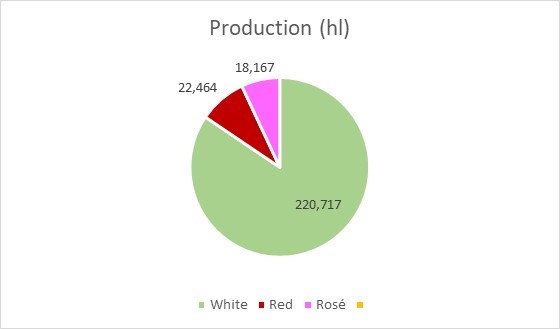
Annual Production (2016):
261,347 hectolitres in total, divided by type of wine:
Production, divided by appellation:
- Sancerre: 173,414 hl
- Pouilly-Fumé: 53,572 hl
- Pouilly-sur-Loire: 786 hl
- Menetou-salon: 8147 hl
- Quincy: 11, 372 hl
- Reuilly: 9,208 hl
- Coteaux du Giennois: 3144 hl
- Châteaumeillant: 1704 hl
Appellations
- Sancerre is located along the left bank of the Loire River
- Pouilly-Fumé and Pouilly-sur-Loire are on the right bank of the Loire River.
- Menetou Salon is to the south-west of Sancerre
- Quincy: the vineyard grows along a plateau dominating the Cher Valley and is northwest of Bourges.
- Reuilly: Southeast of Bourges, Reuilly is located along the banks of the Arnon River to the Cher River.
- Coteaux du Giennois: Northeast of Sancerre, on the banks of the Loire River.
- Châteaumeillant
Interesting Facts
Sancerre is also famous for its goat’s cheese, ‘Crottin de Chavignol’, which has its own appellation. The tradition of making this cheese goes back to the 16th century and it is still a hand-crafted product. You can enjoy it at three different stages of maturity. When it is new, the cheese is smooth and creamy and white-coloured. Over time, the rind hardens and takes on colour and becomes stronger-flavoured. In its fully mature stage, the rind is bluish and the cheese very flavoursome.
Check out this website for more information.
[/mepr-show]
Sources of information
Central Loire Valley Wines (Photo credit and also the source of the statistics used in this post)
Pouilly Fumé A.O.C. official website
Clarke, O. & Rand, M. Grapes and Wines. 2015 edition. London: Pavilion.
Robinson, J., 2015. The Oxford Companion to Wine. 4th Ed. Oxford: Oxford University Press.
