
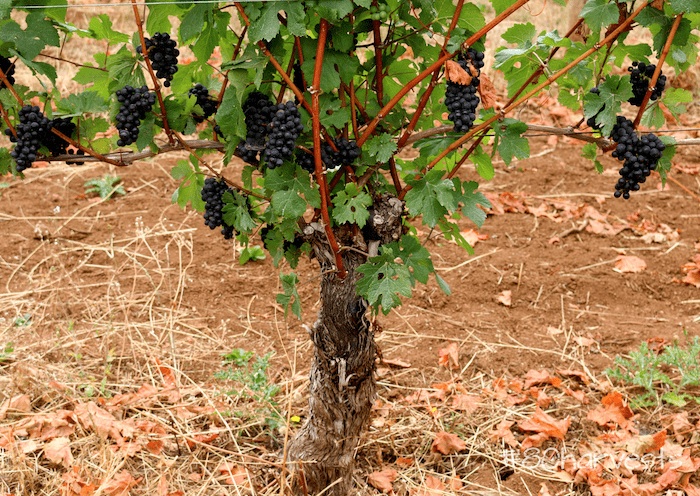
Everyone in Oregon likes to talk about dirt. And that isn’t just trendy wine talk (although there’s plenty of that too!) Oregonians actually care about dirt. That attitude is part of the Willamette Valley terroir. The state is renowned for its outdoorsy lifestyle and that very much translates into the wine culture. How? Well, here’s ‘the dirt’ on Oregon and the Willamette Valley wine region:
The formation of Willamette Valley and its terroir
The story of Oregon’s dirt is recited more often by locals than the Pledge of Allegiance. Many take the monumental Missoula floods as a starting point, but previous to these there is an important chunk of history where Willamette was effectively a seabed. There is also an important volcanic period in Willamette’s history where rich lava flows created new land. The combination of old volcanic soils and the sedimentary soils from its life under water, give the basis to Willamette’s ‘terroir’.
Then came the Missoula floods from Montana and Washington. As the floods washed through Oregon they exposed and deposited a complex mixture soils and left a rich marshland, which provides the fertile valley floor. The flood deposit soils though are mainly too rich for vineyards, and are used for other crops where vigor is a good thing.
Today Willamette Valley finds itself today with three very important dirt types:
Dishing the dirt in Oregon: Jory, Willakenzie & Loess soils
Jory soils (basalt-lavaflow)
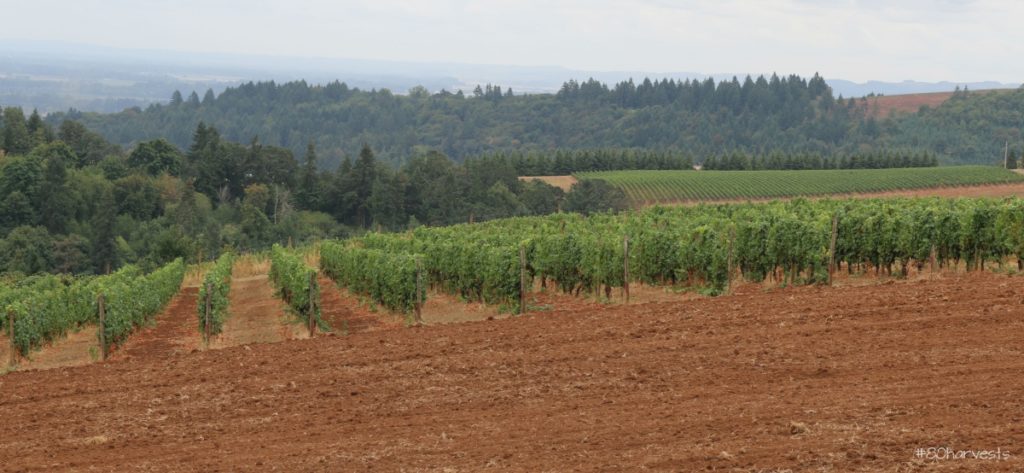
The famously red Jory soils
Probably the most famed of the three main soil types in Willamette, the Jory soils are basalt-based volcanic soils that are rich in nutrients, high in clay content and iron, and have a distinctive reddish colour. The volcanic Jory soils pre-date the Missoula Floods (by between 6 million to 15 million years).
One of the Oregon wine pioneers, David Lett (aka Papa Pinot), came to Willamette specifically hunting out these soils for Pinot Noir production. “[My father] first identified the climate for Pinot Noir, and then the soil,” says Jason Lett, winemaker at The Eyrie Vineyards and son of David. “He identified the Jory soils because of their low fertility and their superior water-holding properties.” Water-holding capacity is important in Oregon, because almost all the vineyards are dry farmed.
The Dundee Hills AVA has become the most prominent sub-appellation in Willamette because of the quality of its Jory soils and its award-winning Pinot Noir in particular. But these Jory soils (in Dundee Hills and in other areas of Willamette) are highly sought after not just by winemakers, they are top soils for forest plantations, berries, the famed filberts (hazelnuts), and Christmas Trees – of which Oregon is the biggest producer in the US.
Tastes like? Pinot Noir from Jory soils are renowned for their bright red cherry and red-fruit flavour profile, with a high acidity and softer tannins.
Willakenzie sedimentary soils (marine sediments)
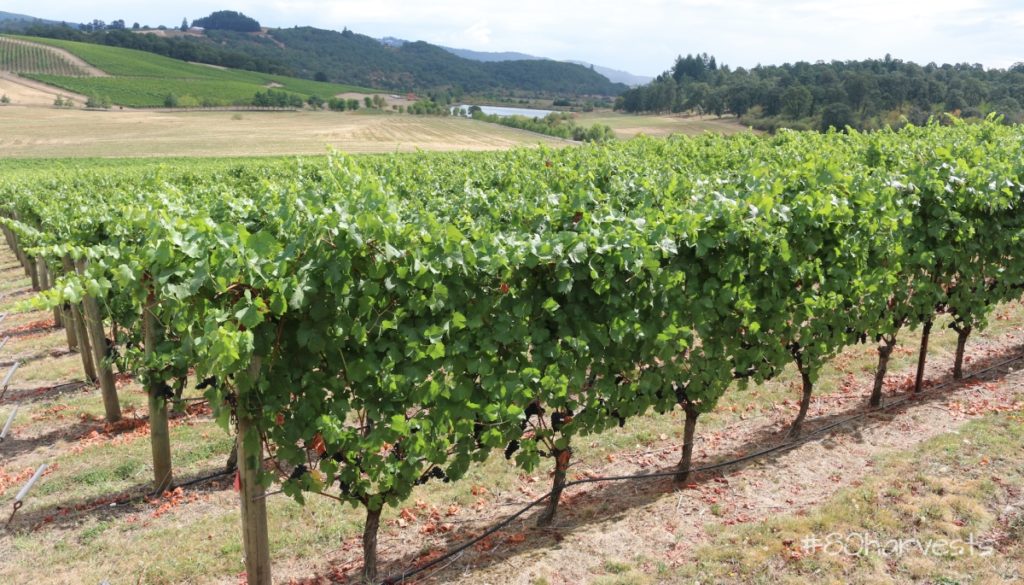
Willakenzie soils
The Willakenzie soils are the oldest of the soils in Willamette valley. They come from a marine origin many millennia ago when western Oregon was in fact a seabed. As the two tectonic plates collided (a similar period in which the lava flows swamped the valley creating the Jory soils), the two major mountain ranges were formed and the ocean floor was lifted. Willakenzie soil is that marine sediment that was initially lifted up by the collided plates.
The soils are very deep and well-drained with silty clay loam over sandstone. They require more input of enriching organic material for the first few years as the soils are very poor, however as the vines get older they develop deep root systems in search for more minerals and water. “You see a moderate vigour in these vines and low cropping,” says Luke McCollom, winemaker at Left Coast Cellars. “It is very hard for them to pull water from these silts because they are very fine particles that hold water very tightly. It creates a lot of spiciness in the wines because they are always working for their water… there’s a lot of structure in the wines, these sedimentary soils hold a firm tannin.”
Tastes like? Pinot Noir from the Willakenzie soils are typically described as having more dark fruit characteristics, like blackberry and black cherry, and sometimes a more earthy note. The tannins are bigger and many producers chose to age the wine for longer so it isn’t as austere. But you can’t paint all sedimentary soils with the same brush says Mike Etzel of Beaux Frères: “Each layer of marine sediment can have different physical properties that express itself in the fruit that is grown there.”
Loess (windblown silt)
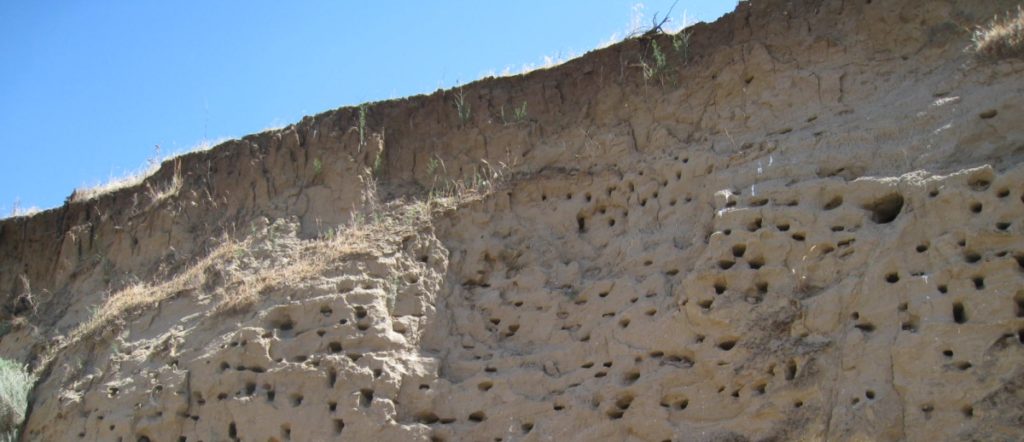
Soft loess soils make great bird nests too…
The youngest, lightest and shallowest of Willamette’s trio of soil types, Loess is the silty loam which arrived by wind. These windblown loess soils layered up in the valley’s hillsides and what is left is a powdery soil that has good drainage but easily erodes. Loess vineyards aren’t as readily planted as basalt or sedimentary sites, however they have built a reputation for a unique character of wines.
Tastes like? Pinot Noir vines on Loess soils usually show red fruit characteristics and a white pepper note and earthiness to them. They are often more round or voluptuous in style.
Two big mountain ranges: the bodyguards of Willamette
The Cascade and the Coastal mountain ranges are fundamental to creating the microclimate that make Willamette a suitable wine region.
On the western ridge, the coastal mountain ranges protect the region from the rather cold Pacific Ocean and creates a rain shadow keeping the vineyards healthy and dry. While the cold waters are ideal for fishing, the maritime climate is too extreme, and too cold, for viticulture. There may be wineries on the seashore side of the coastal mountains, but there aren’t any vineyards.
The coastal hills buffer the harsher maritime conditions, but they do allow the cool ocean breezes to pass through their wider crevices into the valley. The most significant one in Willamette is the Van Duzer corridor – a channel which allows the cool ocean breeze to cool off the majority of the valley every evening around 5pm through the night.
The AVA currently closest to the Van Duzer corridor is the Eolo-Amity Hills, which is renowned for its cooler climate, firmer acidity and tighter tannins in the wines. “We are the closest to the wind gap in the coastal range in the Van Duzer corridor, it is the lowest point,” explains winemaker Ben Casteel of Bethel Heights. So while it affects the entire valley we tend to feel the wind the most acutely in the afternoon, we can have an almost 35C degree diurnal shift.”
The cooling impact of the ocean across the entire valley is a fundamental element for keeping the nuance of varieties like Pinot Noir, without it they would struggle in the heat of the Oregon summers.
So where does the summer heat come from? On the other side of the Cascade mountains is the Owyhee Desert – an extreme continental climate with hot summers and cold winters. The Cascade mountains therefore are the yin to the Coastal Range’s yang. They protect Willamette from the intense heat of central Oregon.
Lying between these two ranges, the Willamette Valley has a unique climate with the best of both worlds – warm and sunny enough to ripen, but cool enough to retain its trademark acidity.
Why Pinot Noir?
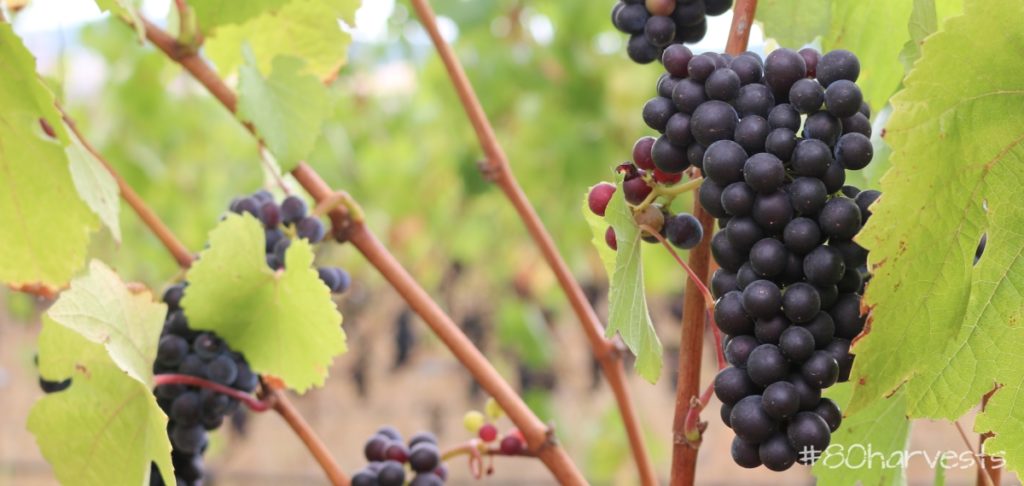
Oregon and the Willamette Valley have become synonymous with Pinot Noir in any wine drinker’s vocabulary. Pinot Noir is by far the most planted variety: out of over 8000 hectares of vineyards in the Willamette Valley, over 70% (5834 of them) are dedicated to the variety.
Pinot Noir was the first variety to put the wine region of Willamette on the map. In the late 70s and early 80s there were few wines being made in Willamette but one of them was The Eyrie Vineyard Pinot Noir that became renowned around the world for standing up to the quality of Burgundy.
It is undoubtedly because of the fame of that wine that so many producers began investing in the variety, and now Willamette Valley is one of the most concentrated Pinot Noir regions in the world. Although that doesn’t by any means make it big… Willamette is most definitely boutique in New World standards. Over three quarters of the producers in Willamette make fewer than 5000 cases of wine. The emphasis on quality over quantity is also what has given Willamette such prestige on a global stage.
However investment is flooding in thick and fast, with big properties being snapped up by not only US producers (mainly from California) but also producers in Burgundy and other parts of the globe. Oregon Pinot Noir is at the top of its game right now, and investors are taking advantage of what is still relatively cheap land.
So what do these changes spell out for Willamette’s future?
The wine future of Willamette?
There’s no doubt that Willamette is going through a period of change at the moment, but that’s also nothing new for this region. When some of the first ‘pioneers’ of the wine region came in the 60s they caused outrage by planting vitis vinifera when only hybrids and american varieties were considered viable. Every decade since there have been new wine producers come into the region – both big and small, local and foreign – and each one creates a ripple effect in this close-knit community. The latest episode in the saga is the chain of purchases by Jackson Family Wines, one of the biggest brands in the US, that now owns over 600 hectares in Willamette.
“Oregon wine industry today is very interesting because for the last 30 years it was a relatively insular wine community,” says Sashi Moorman, winemaker at Evening Land, who were newcomers in 2007. “Now you have a tremendous amount of outside investment and influence coming into the Oregon wine community.”
Willamette hasn’t just become a focus for wine producers, but also wine drinkers. The tech boom in Portland has seen its population explode and wine tourism has shifted up a gear in relatively little time. “There has been an explosion of wineries and tourism,” says Ronni Lacroute, who with her partner Bernard started WillaKenzie Estate in 1991 in Willamette and just sold to JFW. “There was always some tourism but in the winter it would completely shut down. It never slows down now, we see traffic on the roads all the time.”
The change on the community will certainly have an impact on what has traditionally been a farmers community, but there is another change afoot which will also impact the future of Willamette wine.
Thirty years ago, Willamette was a moderate and mild climate with the ideal combination of cool and warm to suit delicate varieties like Pinot Noir. Recent vintages, however, have been getting progressively warmer and less predictable. Each recent vintage seems to break records for earlier and earlier harvest dates, and 2016 saw the first harvests come in by late August. Some of the hotter vintages have led wine producers to question whether Willamette will suit a different wine in the future…
“The climate here is very unusual… Oregonians will tell you this a cool climate, but it isn’t,” says Evening Land‘s Sashi Moorman. “Oregon is a very compact climate. Bud break and flowering is very late, then you have an incredibly hot summer (many days over 35C) so the vines grow like crazy and you get a very rapid development in the vineyard. That used to be followed by a cool Fall, but we haven’t had one for a long time. The old timers say it was never this hot before, which is why they only planted earlier ripening varieties. But today, a later ripening variety like Syrah, would do great.”
Other varieties all seem minuscule in comparison, and the next biggest varieties after Pinot Noir (Pinot Gris with 12% of Willamette’s production; Chardonnay 6%; Riesling 2.6%; Pinot Blanc 1.3%) all reflect the cool climate choices.
Plantings of Cabernet Franc and Syrah are on the rise though as producers hedge their bets against climate change. And with a wealth of different micro-climates each affected by the different exposures of wind, sun and the different soil types, the options in Willamette are wide open.
No one is pulling out their Pinot Noir though, they are just looking into working the canopy in a different way. And new investors (most of whom came into the valley on the Pinot Train) are being more cautious about site selection for the variety.
Back to dirt
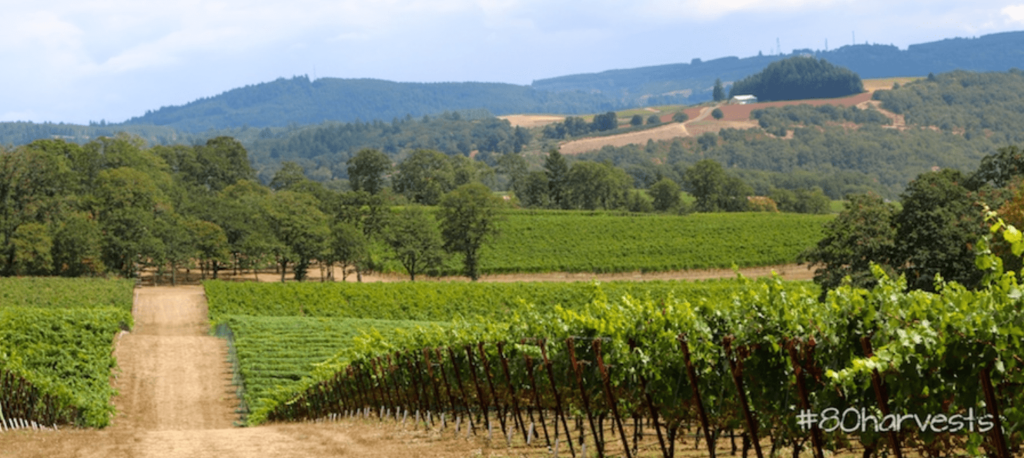
Being Oregon, the vineyard is what matters most to producers. Sustainability isn’t just a buzzword in Oregon. Over 50% of Oregon’s vineyards are organic, biodynamic or sustainable (compared to just 1% in California) and Oregon’s Live program is a leader in sustainable viticulture standards in the US.
Oregon’s organic commitment is down to the local earth-loving attitude. With its fair share of vintage variation and recent unpredictable weather, it takes nerves of steel for Willamette producers to avoid using agrochemicals in tricky years. But they do. Trusting in Mother Nature.
“In the beginning all I did was watch the weather channel and curse!” says Norwegian Dag Johan Sundby who has found the unpredictable weather a steep learning curve since starting his biodynamic winery, Johan Vineyards, over a decade ago. “But now you get a bit more relaxed about all the changes… there’s not much you can do!”
That is in essence the ultimate dirt attitude of Willamette winemakers. And that is part of the charm of Willamette wines, and the transparent nature of Pinot Noir. You can taste the vintage, you can taste the micro region, and you can taste the dirt in each bottle of Willamette wine.
Want to know more about the 2016 vintage in Willamette? Take a look at our winemaker vintage interviews with Jason Lett (Eyrie Vineyards), Ben Casteel (Bethel Heights) and Michael Etzel (Beaux Freres).
