
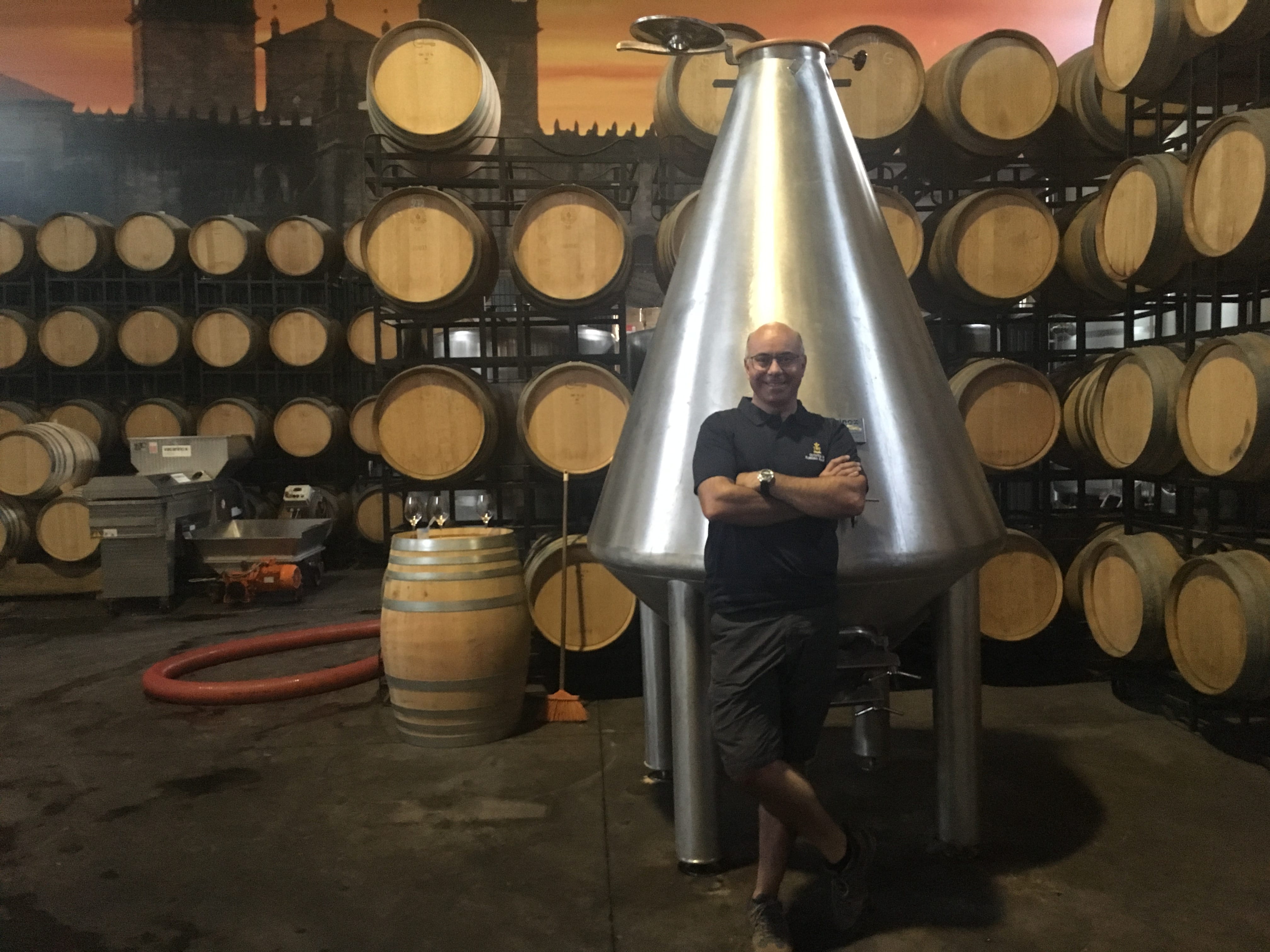
What are the Dão wines all about? One of the Dão’s top winemakers, Carlos Lucas, explains what makes the Dão wine region and its wines unique in this interview. Following a long career building one of Portugal’s biggest companies, Dão Sul, Carlos has had experience making wine all over Portugal but he says the Dāo has won ‘his heart’ when it comes to winemaking in Portugal and this is where he chose to set up his own personal winery, Magnum, with fellow winemaker Carlos Rodrigues. We ask Carlos about the climate, the soils, his favourite Dão wines and grape varieties, his top regional wine pairings and what makes the wines unique.
Wine Tasting Notes: Dão wines with Carlos Lucas
Encruzado 2016
A lightly fragrant wine with notes of asian pear and white fruit, this is the winery’s flagship wine from the Encruzado variety, and about 50% of it spends some time in oak to add a bit more roundness to the finish. It has a really nice salinity to it which would sit nicely with shellfish.
Automatico 2016
This tongue-in-cheek label is what Carlos calls his most ‘natural’ wine, although most of his wines follow a low-intervention line. This one however he says makes itself automatically – a jibe at the natural wine hype – pressed, native ferment, bottled. The wine expresses some more floral, hay notes and it has finesse with a long finish.
Envelope 2016
Here he has achieved a double whammy: a blend of two vintages of Enruzado with double lees – and it works. The resulting wine has texture, length and finesse. This is Carlos’ message in a bottle – showing the potential of Encruzado.
Ribeiro Santo 2007
Occasionally Carlos will sell a library vintage, to show the ageing potential of Encruzado and this does so with aplomb – petrol, hay, with nut and honey notes. Although the aromas are wonderfully evolved, there is still freshness in the finish.
ET 2013
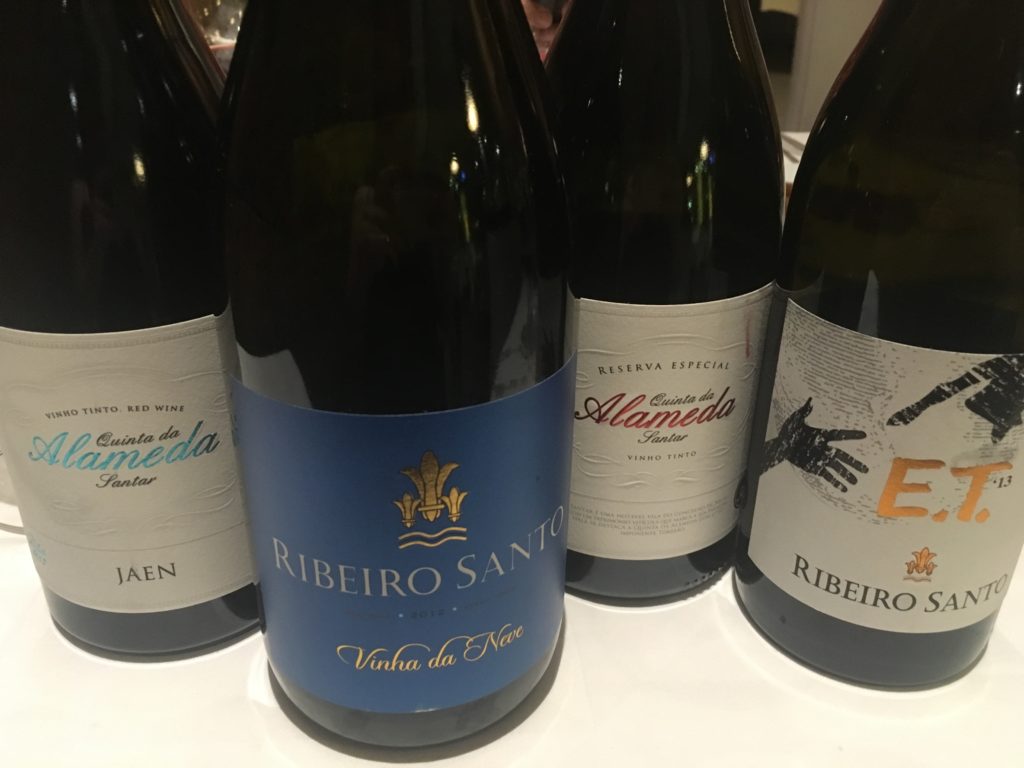
Although the label looks like a reference to the famous film from the 80s, this wine is actually harking back to a wine tradition from the 80s: a field blend, a co-ferment of white and red varieties. In this blend, you have 15% Encruzado with 85% Touriga Nacional. It has meatiness and spice from just over a year in oak, but the base of this wine is floral and juicy fruit. A light, juicy and fresh wine to enjoy by itself or when you are phoning home.
Jaen 2013
There are few producers who make Jaen as a 100% varietal wine. It is a very productive grape that is usually reserved for table wine, but Carlos drops the yield by around 30% through green harvesting to get the concentration for this – the first Jaen of his career, surprising in someone who has made over 22 million bottles of wine per year. The nose is dark fruit, blackcurrant leaf, it has pepper and spice, and is wonderfully drinkable.
Ribeiro Santo Vinha do Neve 2012
This small parcel is a vineyard tucked up into the hillsides surrounded by forests at an altitude of 600m. A field blend of Touriga Nacional, Tinto Cao, Alfrocheiro and Tinta Roriz, this is Carlos’ dynamite wine – dark fruit, liquorice, and what he describes as a ‘dynamite’ nose. Now, I’ve never tasted dynamite, but I would certainly agree to describing a flinty character and great length.
Quinta da Alameda, Santar 2012
Coming from 80-year-old vines, this field blend has over 25 varieties of Portuguese grapes – this is a dark, brooding and more compact wine with real complexity. The wine has a much chewier texture and is a wine made for local steak (which suited our steakhouse location perfectly!)
Carlos Lucas interview on Dão wines
Amanda Barnes: Can you give me an idea of what the climate is like in the Dão? What are the main climatic influences? And how does that impact Dão wines?
Carlos Lucas: Well, we are between mountains. We have the Star mountain [Serra da Estrela], it is a famous mountain. And we have other mountains, and this is a hot climate in the summer and in the winter it is very cold. It rains alot but not too much. And we have a continental climate.
And what are the soils like?
Granitic soil, stone. And sometimes we need to break the stone with dynamite for planting vineyards. And the vineyards are between pine trees in the forest. And sometimes people say, when I cross the Dão region I don’t see any vineyards! Because the vineyards are between the forests.
And why is it that people plant the vineyards between the forests? What’s the purpose?
Where we have pines we have good soil. We have a profundity to plant there – it’s this.
So, the pines do all the work and break down the soil?
Yes! The pines are good workers.
Excellent, and what are the varieties? You have two in particular from the region that you are very fond of – tell us about Encruzado and what it is like as a variety, how it looks and…
Well, Dão is the country of Encruzado white grape and the Touriga Nacional red grape. Touriga Nacional was born in Dão and Encruzado is unique white grape in this Dão region of Portugal. Which is really blessed for growing. Dão is Encruzado white. It’s very nice for when you talk about white grapes and white wines in Dão.
 Super, and in your wines we’ve got very young Encruzado, which you make in a stainless steel tank, through to making older Encruzado. How ageworthy do you think it is as a variety?
Encruzado is a very interesting grape because we can drink Encruzado within one year, and we can keep Encruzado during 15 years! When we have Encruzado in one year, we have a fun wine. When we have Encruzado with a few years in bottle, we have a wine with really petrol notes like white grapes from the Douro. It’s very fun and it is very interesting for the wine producers because we can sell very well this white wine.
And then Touriga Nacional is the Queen of the reds!
The Queen of the red grapes in Portugal. The Queen of the red grapes in Dão is Touriga. Touriga is an elegant grape, it is a wine with elderberry notes, with bergamot notes, and when we keep the Touriga Nacional wine in the barrels during two years. Well, it can age very well! It’s a good wine.
Excellent, and one of the Dão wines that you make is ET – and that’s a mix of Encruzado and Touriga Nacional. And you said that this is really the old style of making wines, Why is it the old style? What’s the importance of co-fermentation in the Dão?
Well, I remember my first time in the winemaking business. When I started in the Dão region we had white grapes and red grapes together. And when I think about ET wine, I think about my old wines in the wine business and it is very interesting now to think about ET wine. ETwine is a strange wine now but in the old past, it was a real Dão wine – white grapes and red grapes together. And for me it is interesting to make something like old times! It’s a fun wine.
And so field blends are very common here, so you’ll normally have a blend of many different grapes. Are there any other special grapes for you from the Dão – apart from Encruzado and Touriga Nacional?
Well Touriga Nacional, Tinta Roriz and Jaen and Alfrocheiro, and Tinta Cao. Tinta Cao in translation is ‘red dog’ – it’s a funny grape. It’s dynamite, it’s power. It’s something for you to keep a long time in bottle. And to drink inbetween five and seven years old in the wine. And Encruzado it’s something you can make different styles. They are common wines in the Dão but fun wines for drinkers.
And my last question is really about the other regions that you make wine in. You’ve made wine all over the world. And you make wine in many different regions of Portugal. Why do you think Dão is your heart? What is it about Dão that makes it so special and unique in your experience?
This is a very easy answer! Dão is a unique place where we can do top wines every year. We have real acidity with a pH in reds that is normally 3.5 and in whites 3.1. We don’t need [to add] anything to keep the wines for a long time. It’s well… Normally I say – the winemaker doesn’t do anything! It’s a simple way. It is wines with care in the wine cellar, and the wines can age alone. It’s simple. Dão is simple. Good wines that are elegant, perfumed, with complexity and gastronomic wines.
Touching on gastronomy, would you give us your top pairing? For your Touriga Nacional? Or one of your red blends? What would you pair it with? What food from your Dão gastronomy?
Well, in Portugal we use a lot of meat, lamb meat, Pork, cheese, we have Serra da Estrela cheese – it’s a top cheese. And so you need to try it. It’s a top top cheese, and something very strong. We have wines for strong meat and you need to try our gastronomy in Dão region.
That’s it. Here – nowhere else. Yes, You need to come!
